

Buying, leasing, or a PPA: how they differ
Who owns the system, who maintains it, and what you sign, in the FTC's words.
Disclosure: We may earn a commission if you buy through links on this page. It does not change our guidance. Affiliate Disclosure
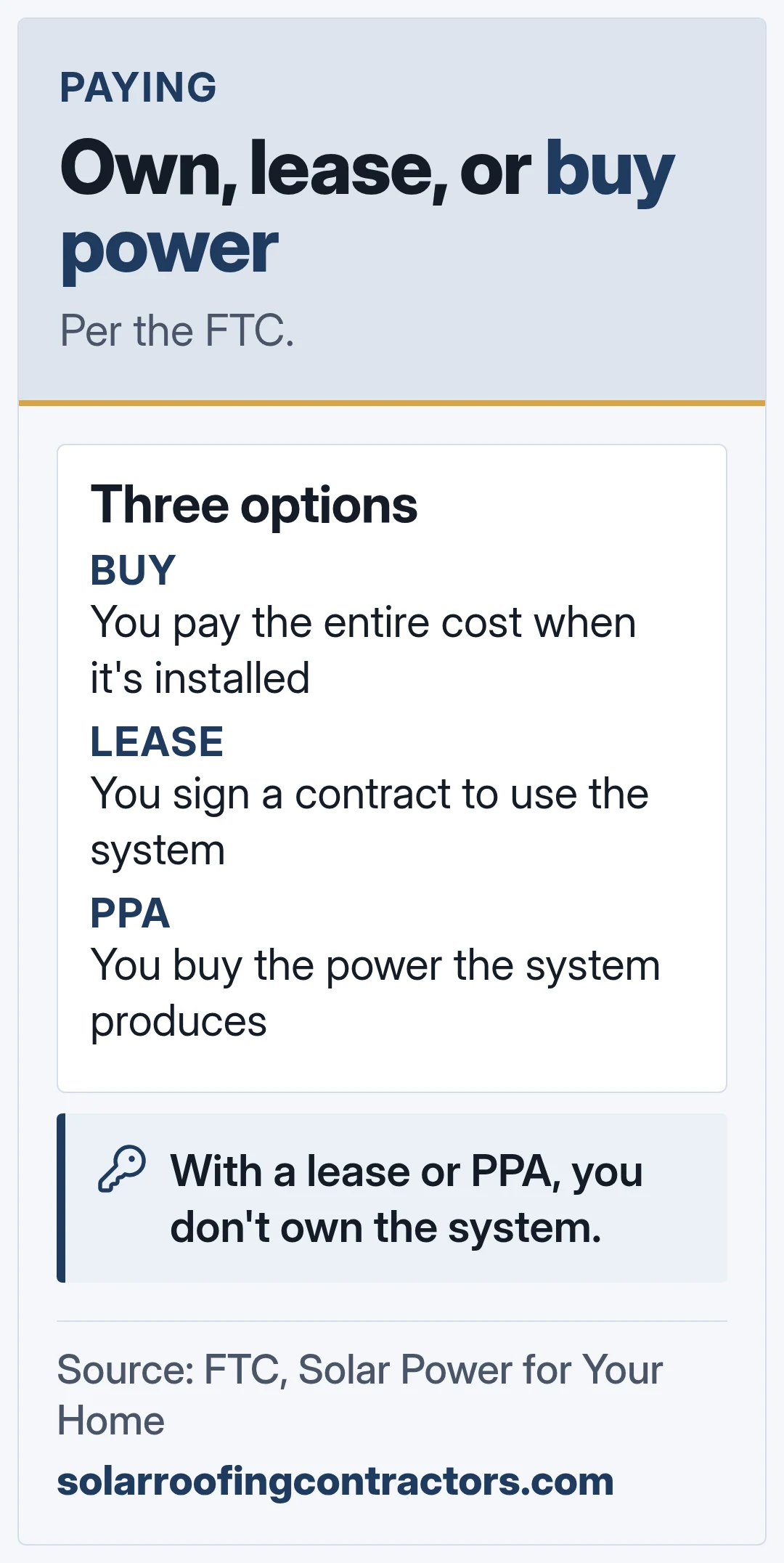
Three options
The FTC says "your options include buying a system, leasing a system, or signing an agreement to buy solar power."
Buying
The FTC says: "When you buy, rather than lease, a solar power system, you pay the entire cost of the system when it's installed."
Leasing
The FTC says: "If you lease a solar system, a company installs the system on your house, and you sign a contract to use it." It says "The leasing company will probably be responsible for system maintenance."
A PPA
The FTC says: "If you choose a PPA, a company installs a system on your house, and you sign a contract to buy power the system produces." It says "you're buying the power the system generates, at a price the PPA provider sets."
Ownership
The FTC says: "When you lease a system or have a PPA, you don't own the system."
What we do not say
We do not say which option suits you, and we give no prices or payments. We do not give costs, savings, payback, or home value figures.
This is general information, not tax, financial, legal, or engineering advice.
Sources: FTC, Solar Power for Your Home.
FAQ
General information only. We are not a contractor, installer, lender, or tax adviser. We do not refer, match, vet, rate, or check contractors, and we do not collect your information. Before you hire anyone, verify their license or registration with your state (in Washington, use the Department of Labor & Industries' Verify tool), get written bids, and read every contract and financing document. For tax questions, see IRS.gov or ask a tax professional.



Next: loans and PACE
Questions the FTC lists.
