

How to spot a bad solar offer, per the FTC
Pressure, cash demands, and false ties to the government, in the FTC's words.
Disclosure: We may earn a commission if you buy through links on this page. It does not change our guidance. Affiliate Disclosure
Pressure and cash
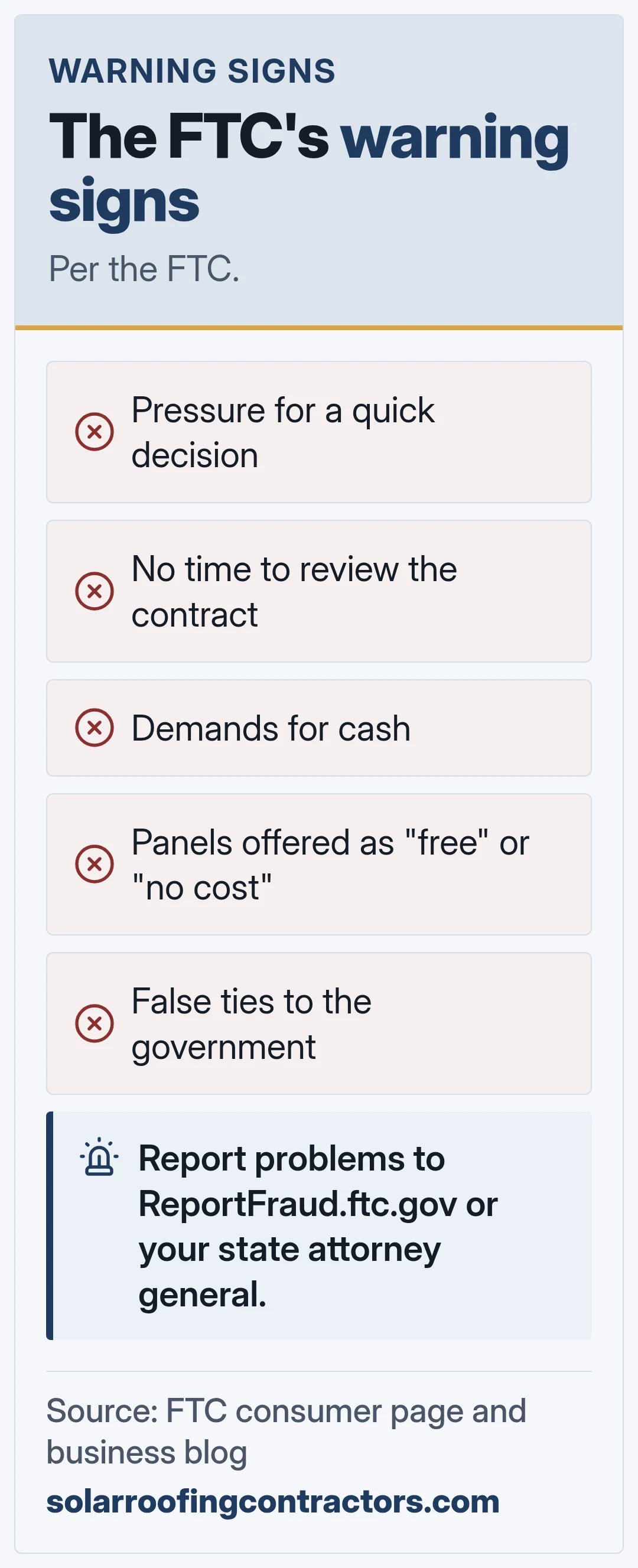
The FTC says: "Never deal with a power or home repair company that pressures you for a quick decision, tells you to sign a contract without time to review, or asks you to pay in cash."
The FTC on offers of panels
In its guidance for solar sellers, the FTC says offers for "free" or "no cost" solar panels are scams.
Government ties
The FTC says its Impersonation Rule applies to "government imposters" and to "those who misrepresent that they're affiliated with, endorsed, or sponsored by legitimate businesses." We are not a government program, and no agency runs a program through this site.
Promises about tax breaks
The FTC tells solar sellers not to "overpromise cost savings that might come through tax credits, rebates, or incentives." That post is dated Aug. 7, 2024.
Reporting a problem
The FTC says: "If you have a problem with a system you bought, try to resolve it with the company first." If that fails, it lists "the Federal Trade Commission at ReportFraud.ftc.gov" and "your state attorney general."
This is general information, not tax, financial, legal, or engineering advice.
Sources: FTC, Solar Power for Your Home; FTC business blog, Don't waste your energy on a solar scam (Aug. 7, 2024).
FAQ
General information only. We are not a contractor, installer, lender, or tax adviser. We do not refer, match, vet, rate, or check contractors, and we do not collect your information. Before you hire anyone, verify their license or registration with your state (in Washington, use the Department of Labor & Industries' Verify tool), get written bids, and read every contract and financing document. For tax questions, see IRS.gov or ask a tax professional.

Next: Cooling-Off Rule
The rule, in its own words.
