

Inverters and batteries: what they do
Inverters turn panel output into household power. Batteries store it for later.
Disclosure: We may earn a commission if you buy through links on this page. It does not change our guidance. Affiliate Disclosure
What an inverter does
DOE says inverters "convert the direct current (DC) electricity generated by solar photovoltaic modules into alternating current (AC) electricity."
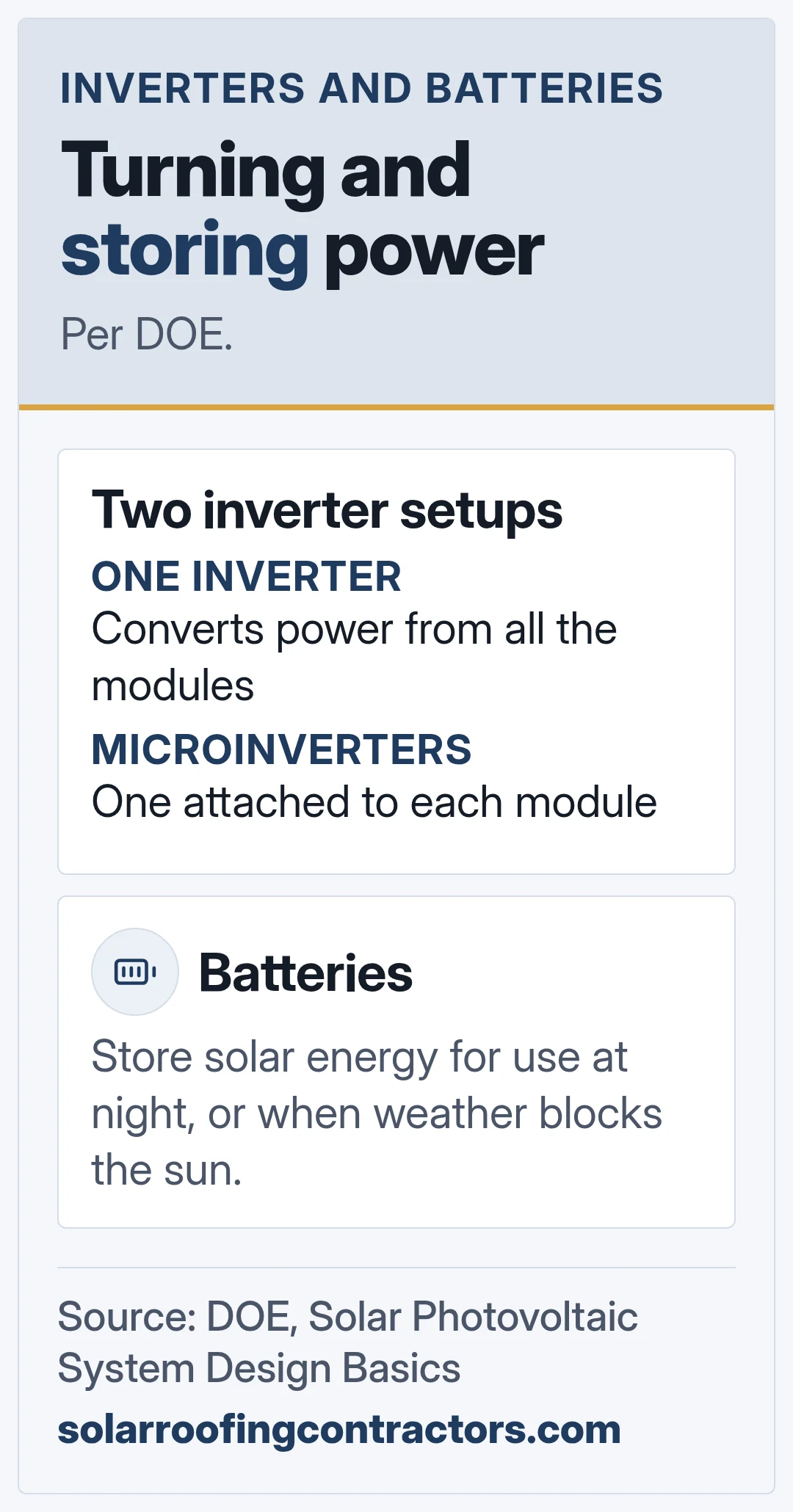
One inverter or microinverters
DOE says PV systems "either have one inverter that converts the electricity generated by all of the modules, or microinverters that are attached to each individual module." DOE says the microinverter "allows for independent operation of each panel."
Batteries
DOE says batteries "allow for the storage of solar photovoltaic energy, so we can use it to power our homes at night or when weather elements keep sunlight from reaching PV panels."
Warranties
The FTC says bids should say "what warranties apply to the equipment" and the installation workmanship. Read each warranty and the contract.
High-voltage equipment
Do not open electrical equipment based on anything on this site. Use licensed or registered professionals as your state requires.
This is general information, not tax, financial, legal, or engineering advice.
Sources: DOE, Solar Photovoltaic System Design Basics; FTC, Solar Power for Your Home.
FAQ
General information only. We are not a contractor, installer, lender, or tax adviser. We do not refer, match, vet, rate, or check contractors, and we do not collect your information. Before you hire anyone, verify their license or registration with your state (in Washington, use the Department of Labor & Industries' Verify tool), get written bids, and read every contract and financing document. For tax questions, see IRS.gov or ask a tax professional.



Next: how solar panels work
Cells, panels, and arrays.
